

Concrete Giants
The great stages of paulista football
Concrete Giants
Where architecturemeets passion.
The Concrete Giants route showcases the main stages of paulista football: the modern Neo Química Arena, the technological Allianz Parque, the monumental MorumBIS and the historic Pacaembu.
Neo Química Arena, home of Corinthians, has been a benchmark in matchday experience since 2014, with one of the most participative crowds in the country. Allianz Parque, home of Palmeiras, sits on the land of the former Parque Antarctica and pairs century-old tradition with one of the most advanced infrastructures in Latin America, also serving as a stage for major sports and cultural events.
MorumBIS, home of São Paulo Futebol Clube, is one of the largest stadiums in Brazil and a symbol of greatness in national football, with a history marked by international conquests and great spectacles. Pacaembu, now Mercado Livre Arena, is the sacred ground that brings every paulista crowd together under its iconic art déco facade. Host of the 1950 World Cup, the complex breathes history through the Football Museum and reinvents itself as a modern multi-use center.
Together, these stadiums represent the diversity and strength of football in São Paulo: not just playing fields, but spaces of memory, passion and great cultural events.
Neo Química Arena
Arena Corinthians
Av. Miguel Ignácio Curi, 111
Itaquera, Zona Leste
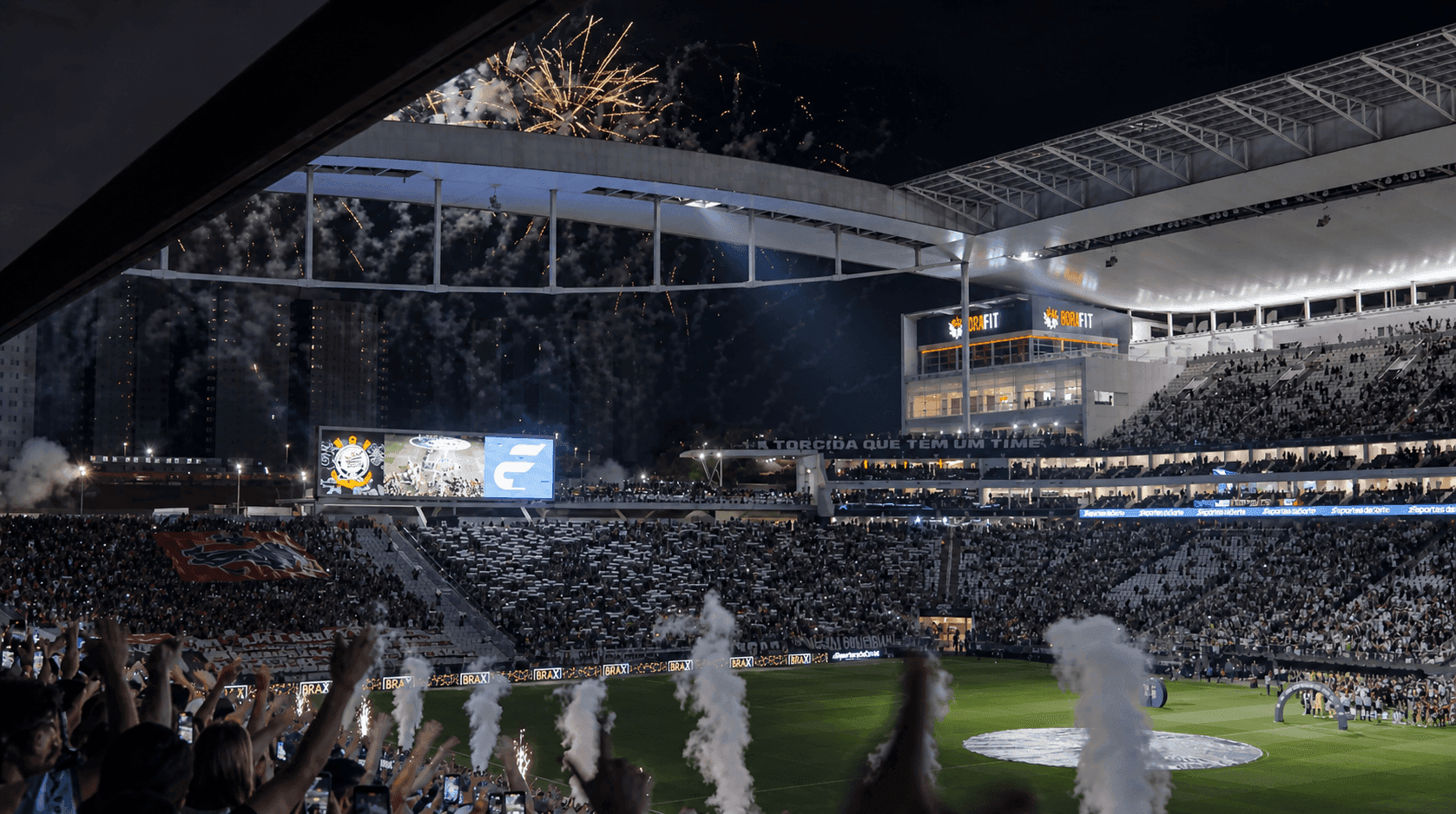
Opened on May 10, 2014 for the FIFA World Cup opening match, Neo Química Arena was built to be the official home of Sport Club Corinthians Paulista. The architectural project prioritizes luxury and functionality, placing the club firmly among the elite of international multipurpose arenas and raising the standard of comfort in sport.
The stadium features world-class infrastructure, with full pitch visibility from every sector. The lighting and acoustics system was designed to create a unique pressure atmosphere, often compared to a real "speaker box" that amplifies the singing from the stands.
Among its curiosities, it features one of the largest LED screens in the world on its outer facade and refined finishes in marble and granite. It hosted the 2014 World Cup opener, the 2016 Olympic Games and the first NFL game in South America, proving its vocation to receive major global events while keeping the elegance of its premium sectors.
The history of Neo Química Arena is marked by innovation, technology and the strength of the corinthiano people. Towering mosaics, choreographed lights and the deafening sound of the Fiel turn the pitch into a pulsing cauldron. More than marble and steel, it is the sacred ground of a faithful crowd and the pride of a club that turns every match into a spectacle of lights and devotion.
Highlights
Inaugurada em 10 de maio de 2014, na abertura da Copa do Mundo da FIFA
Um dos maiores telões de LED do mundo na fachada externa
Acabamentos nobres em mármore e granito
Atmosfera de "caixa de som" potencializa o canto da Fiel
Sediou Jogos Olímpicos de 2016 e o primeiro jogo da NFL na América do Sul
Visibilidade total do gramado em todos os setores
How to get there
Linha 3-Vermelha até Estação Corinthians-Itaquera. Caminhada de 10 minutos. Trajeto do Centro leva 30 a 40 minutos.
Tarifa: R$ 5,00
Linha 11-Coral da CPTM até Estação Corinthians-Itaquera (mesma estação do Metrô).
Tarifa: R$ 5,00

Allianz Parque
Allianz Parque (sobre o antigo Parque Antarctica)
Rua Palestra Itália, 200
Pompeia / Perdizes, Zona Oeste
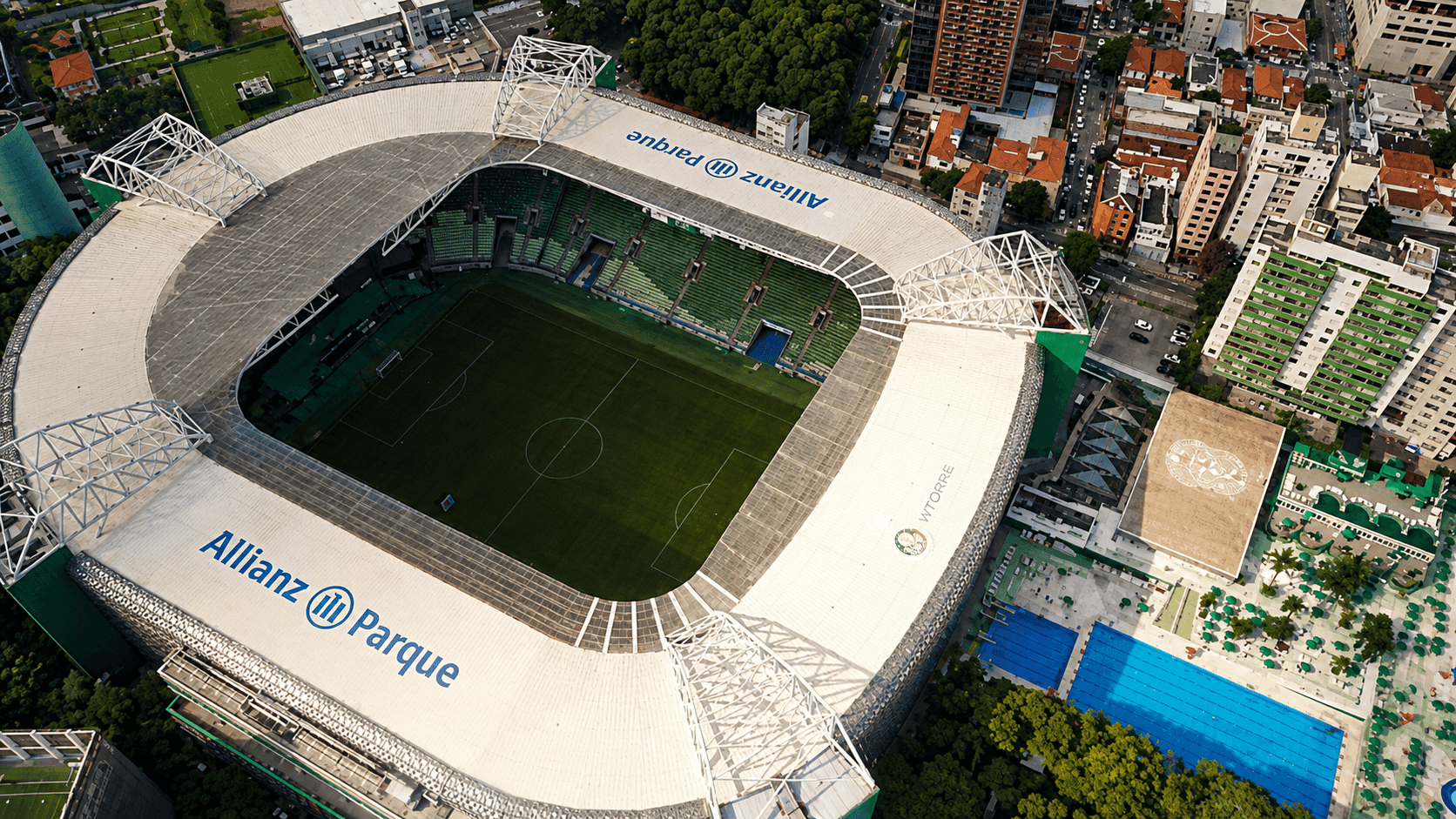
Allianz Parque, built on the sacred ground of the former Parque Antarctica and opened in 2014, is a benchmark of modernity and versatility in Brazil. Home of Sociedade Esportiva Palmeiras, it represents the evolution of multipurpose arenas, keeping alive the club's century-old tradition while consolidating itself as one of the most awarded and technological stadiums in Latin America.
With capacity for 43,700 people in matches and up to 55,000 for concerts, it is the country's main destination for global tours, having hosted everyone from Paul McCartney to major festivals. The modular amphitheater in the North sector allows mid-size events with independent structure, ensuring fast transitions between decisive football matches and international megaproductions.
Beyond the spectacle, the complex works as an active ecosystem of services and leisure, with a gym, corporate spaces and the Parque Mirante events hub. The dining is also a highlight: Japanese spot Nagairô Sushi, contemporary BRAZA Gastronomia and Italian La Coppa Neotrattoria offer a privileged view of the pitch. For those who want to explore behind the scenes, Allianz Parque Experience takes the visitor through restricted areas, like the dressing rooms and pitchside, with access to the Trophy Hall.
On event days, the vibrant atmosphere extends to Rua Palestra Itália and Rua Caraíbas. The interaction between club, neighborhood and supporters consolidates Allianz Parque as a contemporary model of urban arena and social gathering, where century-old tradition and technology meet at every kickoff.
Highlights
Inaugurado em 2014 sobre o solo sagrado do antigo Parque Antarctica
43.700 lugares em jogos e até 55.000 em eventos musicais
Anfiteatro modular no setor Norte para eventos de médio porte
Recebeu Paul McCartney, U2 e grandes festivais
Hub gastronômico: Nagairô Sushi, BRAZA Gastronomia, La Coppa Neotrattoria
Allianz Parque Experience: tour de até 1h30 com Sala de Troféus
Nearby attraction
Ruas Palestra Itália e Caraíbas
Em dias de evento, a atmosfera vibrante se expande para o entorno. A interação entre o clube, o bairro e a torcida consolida o complexo como um modelo contemporâneo de arena urbana.
How to get there
Estação Palmeiras-Barra Funda (Linha 3-Vermelha), com 10 minutos de caminhada até o estádio.
Tarifa: R$ 5,00
Estacionamento interno via Rua Padre Antônio Tomás. Bourbon Shopping (ao lado) e Shopping West Plaza (5 a 10 min a pé) também recebem.
MorumBIS
Estádio Cícero Pompeu de Toledo
Praça Roberto Gomes Pedrosa, 1
Morumbi, Zona Oeste
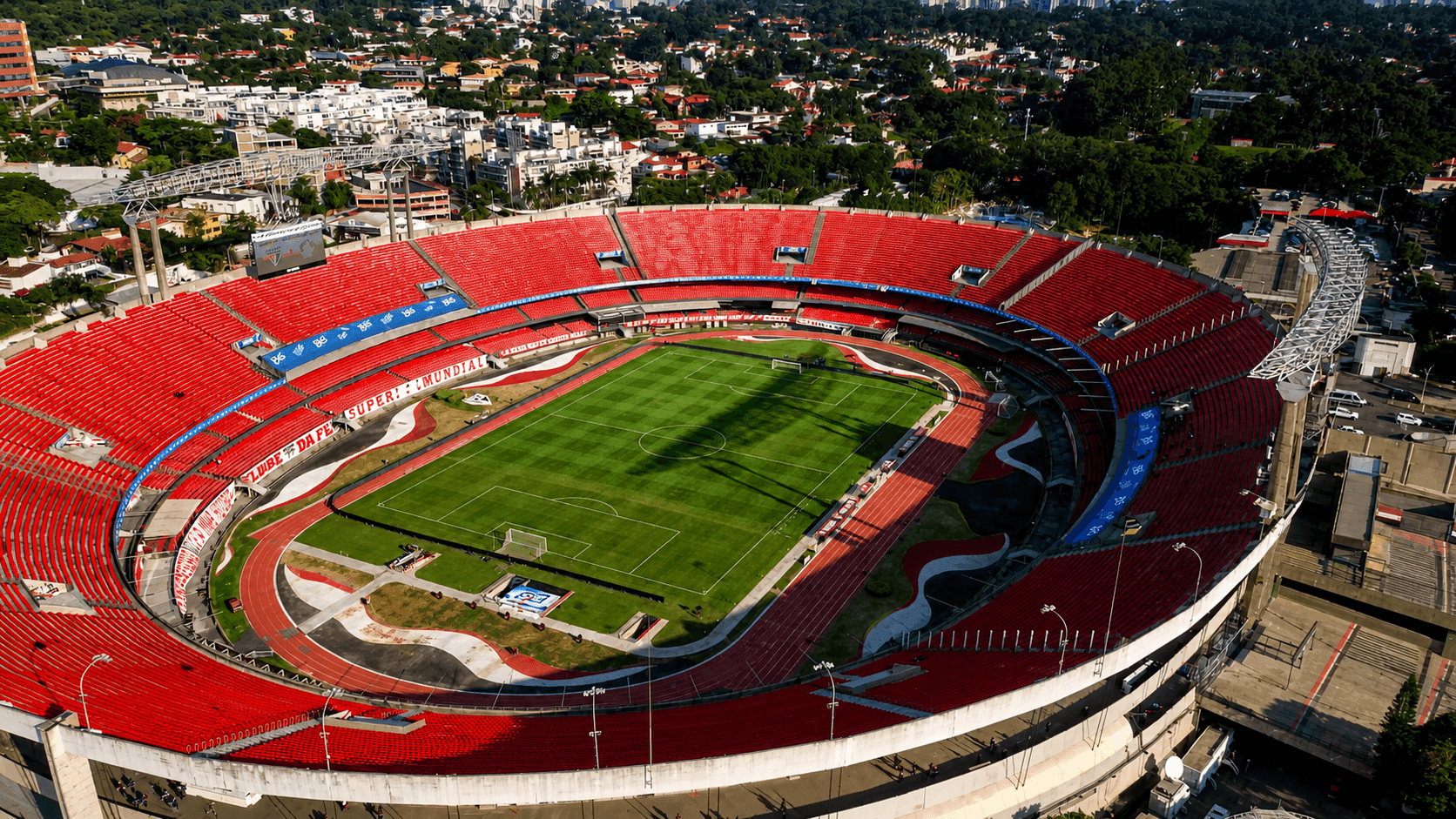
MorumBIS is the home of São Paulo Futebol Clube and one of the most emblematic stadiums in the world. With capacity for around 66,700 people, it holds the title of largest privately owned stadium in Brazil and is one of the pillars of South American football. Fully opened in 1970, the Gigante do Morumbi carries a monumental scale and recorded its all-time attendance record in 1977, when more than 146,000 people packed the stands for the Campeonato Paulista final.
In the sporting scene, the stadium consolidated itself as the Brazilian venue that has hosted the most Copa Libertadores finals in history. It was on this pitch that the Tricolor lifted its 1992 and 2005 continental trophies, and where legends like Pelé, Maradona, Messi and Cristiano Ronaldo showcased their talent. Beyond the collective glories, the stadium hosted iconic moments like the historic farewell of Rogério Ceni, the greatest idol in the club's history.
Beyond the four lines, MorumBIS was a pioneer in welcoming international megaevents in the country. Since the historic Queen tour in 1981, the stadium became a mandatory stop for the world's biggest artists. Names like Michael Jackson, Madonna, U2 and Coldplay delivered memorable performances on site, turning the arena into a global entertainment center that goes beyond football.
Today, the stadium operates under the 24-hour arena concept through Morumbi Concept Hall, with stores, services and high-end dining like By Koji and Fogo de Chão, with a direct view of the pitch. The MorumBIS Tour takes visitors behind the scenes, including the Memorial of Conquests, dressing rooms and the access tunnel to the pitch. More than a stadium, the Gigante do Morumbi is the monumental pride of a club that lives by its international conquests.
Highlights
Maior estádio particular do Brasil, com 66.700 lugares
Inaugurado totalmente em 1970
Recorde absoluto de público em 1977: mais de 146 mil pessoas
Estádio brasileiro que mais recebeu finais de Libertadores
Palco das conquistas continentais do Tricolor (1992 e 2005)
Pioneiro em megaturnês: Queen (1981), Michael Jackson, Madonna, U2, Coldplay
Nearby attraction
Morumbi Concept Hall
Conceito de arena 24 horas com lojas, serviços e gastronomia de alto nível como By Koji e Fogo de Chão, com vista direta para o campo.
How to get there
Linha 4-Amarela até Estação São Paulo-Morumbi, seguida de caminhada de 15 minutos pela Avenida Jorge João Saad.
Tarifa: R$ 5,00
Ponto de referência: Praça Roberto Gomes Pedrosa. Em dia de grande evento, desembarcar próximo ao metrô evita bloqueios viários.


Mercado Livre Arena Pacaembu
Estádio Municipal Paulo Machado de Carvalho
Praça Charles Miller, s/n
Pacaembu, Zona Oeste
Estádio do Pacaembu, now Mercado Livre Arena Pacaembu, is one of the greatest icons of Brazilian football and a historical heritage of São Paulo. Opened in 1940, its art déco architecture is an urban reference, standing out for the iconic curved facade that frames Praça Charles Miller, named after the pioneer of football in Brazil.
Host of the 1950 World Cup, the stadium transcends rivalries: for decades it was the second home of Corinthians, Palmeiras, São Paulo and Santos, hosting important moments and conquests of every paulista club.
Beyond its relevance in professional football, "Paca" is the ultimate symbol of youth football, traditionally hosting the final of the Copa São Paulo de Futebol Júnior. Every January 25, the city's anniversary, the stadium becomes the country's center stage to reveal new football talent in the Copinha decisive match.
This connection with youth and with the history of São Paulo makes it a living character. Now rebranded as Mercado Livre Arena Pacaembu, the complex is modernizing to offer a multi-use experience, keeping its democratic essence while projecting the future of sports entertainment in the city.
Highlights
Inaugurado em 1940, fachada art déco icônica
Sede da Copa do Mundo de 1950
Segunda casa histórica de Corinthians, Palmeiras, São Paulo e Santos
Palco da final da Copa São Paulo de Futebol Júnior em 25 de janeiro
Patrimônio histórico de São Paulo
Modernização como Mercado Livre Arena Pacaembu, centro multiuso
Nearby attraction
Praça Charles Miller
Em homenagem ao pioneiro do futebol no Brasil. Endereço de tradição que envolve toda a atmosfera histórica do esporte nacional.
How to get there
Estação Clínicas (Linha 2-Verde), a cerca de 1,2 km do estádio. Diversas linhas de ônibus atendem a Avenida Pacaembu.
Tarifa: R$ 5,00